
Few things are more stressful than walking downstairs on a freezing winter morning and feeling your basement carpet squish under your feet. The snow outside might look peaceful, but inside, cold water can be creeping across the floor toward storage boxes, kids’ play areas, or a finished family room. By the time you notice, the damage is already done and you are stuck dealing with fans, dehumidifiers, and insurance calls.
Winter is not just about icy roads and higher heating bills. The mix of snow, sudden thaws, and winter rain puts a lot of pressure on basements. Many of the calls we receive in late winter and early spring come from homeowners who already had a sump pump but found out the hard way that it was not ready for the season.
At Mom & Pop Plumbing, we have been plumbing in this area since 2017, and our team has cleaned up and repaired many flooded basements after winter storms. Owner and Air Force veteran Pete Czmyr brings more than 20 years of plumbing experience, including water mitigation and drain work, so we see exactly how and why sump pumps fail when the temperature drops. In this guide, we are sharing the winter sump pump tips we give our Manchester neighbors, so you can weather-proof your basement before the next storm hits.
Why Winter Puts Extra Stress On Your Basement
Winter weather is unpredictable. Long stretches of deep freeze are often followed by quick warm-ups with rain falling on top of snow, then refreezing overnight. When the ground is frozen near the surface, meltwater and rain cannot soak in easily. Instead, that water runs along the top layer of soil and heads straight for the lowest nearby point, which is often your foundation.
As the soil around your foundation becomes saturated, water pressure builds against basement walls and floors. This hydrostatic pressure forces moisture through porous concrete, joints where the floor meets the wall, hairline cracks, and gaps around utility penetrations. Even without visible cracks, water can still find its way inside under the right conditions.
Older homes with block or stone foundations tend to be even more vulnerable when soil is saturated and frozen near the surface. Homes built on sloped lots also face higher risk, since water naturally collects on the downhill side of the structure. That area often sees the highest pressure and is where winter basement leaks commonly begin.
Winter storms also bring the added risk of power outages. Heavy snow and ice can bring down branches or lines, and when the power goes out, a standard electric sump pump stops working. Without a backup system in place, your basement can be left unprotected at exactly the wrong time.
How Your Sump Pump Protects Your Basement In Winter
Your sump pump acts as a pressure relief system for your basement. It collects groundwater before it reaches the floor and pumps it safely away from the foundation. Understanding how the entire system works helps you prepare it for winter conditions.
Water enters a sump pit through foundation drains or surrounding gravel. Inside the pit, a pump and float or pressure switch monitor the water level. As water rises, the float activates the pump, which moves water out through a discharge pipe. A check valve prevents water from flowing back into the pit after the pump shuts off, reducing unnecessary cycling and wear.
The discharge pipe plays a critical role in winter reliability. If it has low spots, runs flat, or empties where water can pool and freeze, the system becomes vulnerable to ice blockages. Power supply also matters. Most pumps plug into a standard outlet, often GFCI-protected. If that outlet trips or the circuit overloads, the pump stops working.
Battery backup or water-powered backup systems provide protection when electricity fails. At Mom & Pop Plumbing, we evaluate the entire setup, not just the pump itself, to ensure reliable winter performance.
Common Winter Sump Pump Failures
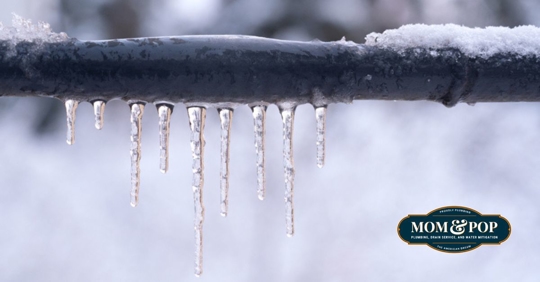
Most winter basement floods come down to a handful of common issues. Frozen discharge lines are one of the biggest culprits. Water left in a poorly sloped or exposed pipe can freeze overnight, blocking flow and causing the pit to overflow when the pump runs.
Float switch problems are another frequent issue. Debris, silt, or ice buildup in the pit can prevent the float from moving freely. A stuck float can stop the pump from turning on or cause it to run continuously until it overheats.
Power issues also cause failures. Pumps that share circuits with other appliances may trip breakers, while GFCI outlets can shut off during damp conditions. If no one checks the outlet, the pump can remain off while groundwater continues to rise.
Finally, winter is when aging pumps often fail. Pumps that handle light summer use may not withstand heavy snowmelt and winter rain. Worn components tend to show their weakness during extended run times, leading to sudden failure in the middle of a storm.
Winter Sump Pump Checklist You Can Do Yourself
Homeowners can take several simple steps to improve winter reliability. Start by testing the pump. Pour water into the pit until the float rises and the pump turns on. Watch to ensure the water level drops steadily and the pump shuts off smoothly.
Inspect the pit for debris that could interfere with the float or intake. Remove loose stones or trash by hand and make sure cords are not tangled. Clear space around the pump allows it to operate properly.
Follow the discharge line from the pump to the exterior. Confirm it slopes away from the foundation and that the outlet is clear of snow, leaves, and ice. During testing, have someone verify that water is flowing freely outside and draining away from the home.
Check the power source. Plug the pump directly into the outlet and reset any GFCI protection. If breakers trip frequently or the pump shares a circuit with other equipment, note it for professional evaluation. At Mom & Pop Plumbing, we walk homeowners through these checks during service visits so they feel confident maintaining the system.
Upgrades That Make Sense For Winter Protection
Once the system is functioning properly, certain upgrades can significantly improve winter protection. Battery backup sump pumps provide continued operation during power outages and are especially valuable for finished basements or areas with valuable storage.
High-water alarms alert you when the pit water rises too high, giving you time to address problems like frozen discharge lines or tripped outlets before flooding occurs. Some alarms also send mobile alerts for added peace of mind.
Improving discharge routing can also help. Adjusting slope, eliminating low spots, adding freeze-resistant extensions, or relocating the outlet farther from the foundation can reduce icing and runoff problems. Keeping gutters clear and directing downspouts away from the foundation also lowers the amount of water entering the sump system.
At Mom & Pop Plumbing, we provide options-based recommendations with flat-rate pricing, allowing you to choose the level of protection that fits your needs and budget.
When A Winter Sump Pump Problem Calls For A Plumber
Some warning signs indicate it is time to call a professional. A pump that runs constantly or short cycles rapidly may have a failed check valve, discharge issue, or sizing problem. These issues are best addressed before they cause a complete failure during severe weather.
Unusual noises such as grinding or loud humming can point to worn bearings or blockages. Water on the basement floor while the pump is running signals that the system cannot keep up with incoming water. Frozen or broken discharge lines and repeated breaker or GFCI trips also require professional attention.
A licensed plumber can test pump performance, inspect components, and recommend system improvements. At Mom & Pop Plumbing, we offer prompt service during regular business hours and address both pump issues and contributing drainage problems. Our work is backed by warranty, so solutions are built to last.
Partner With A Local Team To Weather-Proof Your Basement
Manchester winters will always bring snow, ice, and surprise thaws. You cannot control the weather, but you can control how ready your basement is to handle it. When your sump system is tested, your discharge line is winter-ready, and the right backups and alarms are in place, serious water damage becomes far less likely. Instead of wondering what will happen in the next big storm, you know you have a plan and a team you can call.
Mom & Pop Plumbing is a veteran-owned, Manchester-based plumbing company that believes in doing the job right and treating customers like friends. We have helped homeowners throughout Manchester, Vernon, and the surrounding Hartford and Tolland County communities prepare their basements for winter, repair winter sump pump failures, and improve drainage for the long term. With transparent flat-rate pricing, multiple options on every call, and warranty-backed work, you stay in control of your budget while we focus on keeping your home dry.
If you would like a professional set of eyes on your system before the deep freeze, or if you are already seeing warning signs from your sump pump, we are ready to help you plan the right next step. Schedule a pre-winter sump pump and basement moisture check, or reach out as soon as you notice a problem, so a small issue does not turn into a flooded basement.